Full refrigerant pressure test
We connect pressure testing gauges to the service ports and compare static and running pressures to the manufacturer's spec. This tells us whether the circuit is losing charge or the compressor is simply worn out.
HVAC Leak Detection in Chula Vista is what you call when the AC hisses, the ceiling stains, or the system loses charge every summer. Our HVAC leak detection service Chula Vista crews trace refrigerant and condensate leaks inside walls, attics, and slab lines across San Diego County. We pinpoint the source, show you the evidence, and fix it the same visit. Call (619) 943-1896.
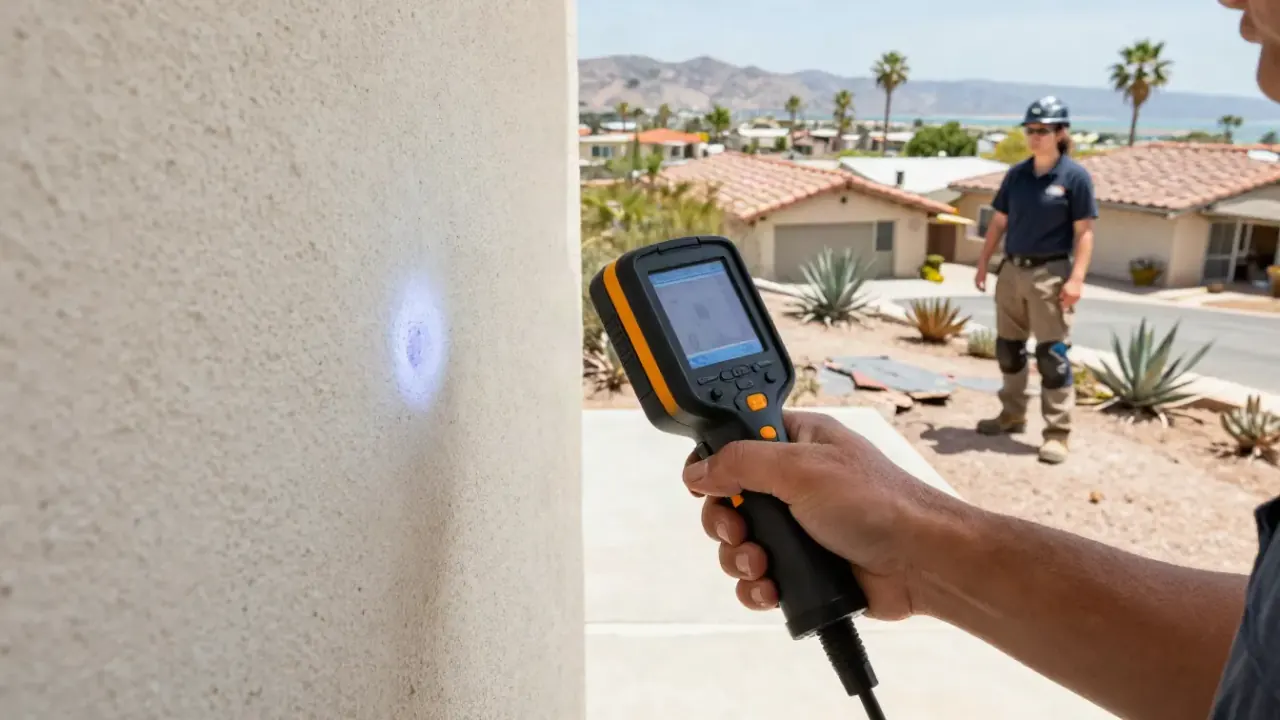
HVAC Leak Detection in Chula Vista is the process of finding where refrigerant, condensate, or ducted air is escaping from your heating and cooling system. We start with a pressure test on the refrigerant circuit, then confirm the leak with electronic leak detection equipment, ultrasonic leak detectors, and thermal imaging cameras. A refrigerant leak drops your system's charge, so the compressor runs longer, the coil freezes, and your electric bill climbs. A condensate leak is different: the drain line clogs or the pan cracks, and water drips into the attic, ceiling, or slab. Both need a trained eye, not a guess and a recharge.
Chula Vista summers push AC systems hard from May through October, and that constant runtime exposes weak solder joints, worn O-rings, and corroded copper pipe inside older Rancho del Rey and Castle Park homes. We also see condensate leaks after monsoon humidity spikes, when drain pans overflow because the trap is clogged with algae. If you have been searching how to find an HVAC leak in Chula Vista, California, the answer is pressure testing plus a tracer gas detector, not a can of sealant. We run that full sequence on every call so you get a real answer, not a repeat visit.
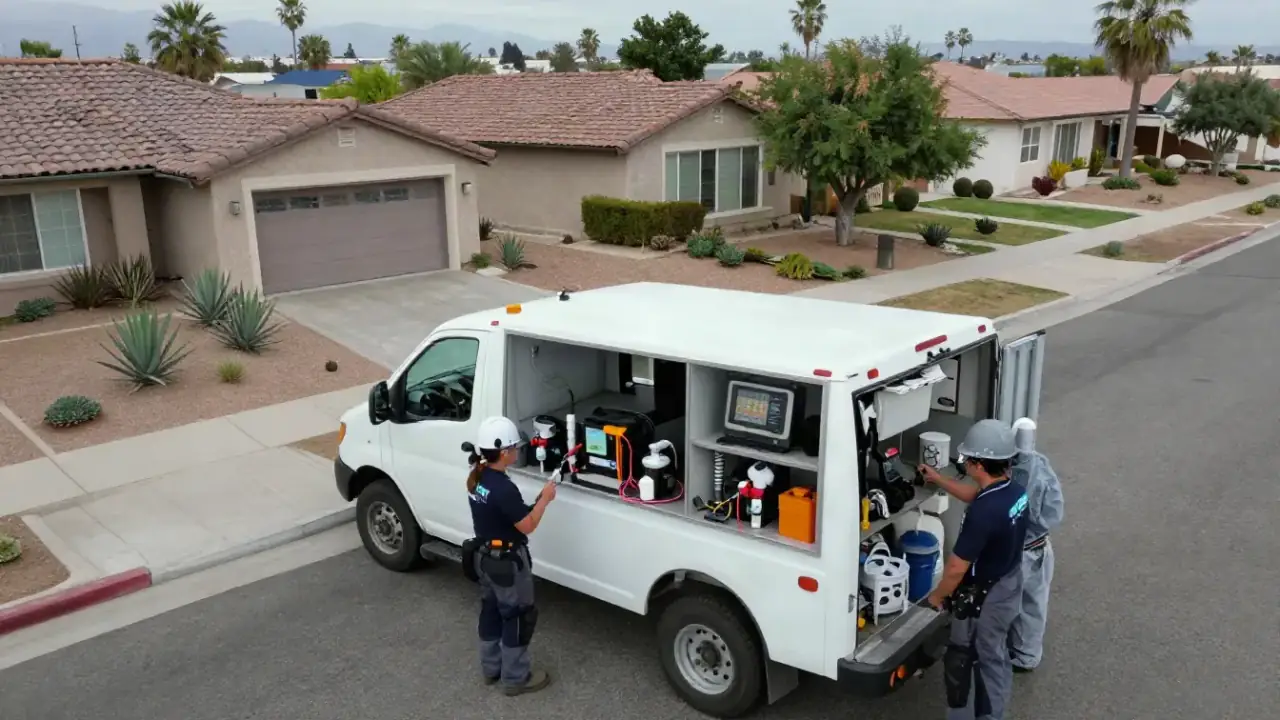
Every call includes the full diagnostic sequence, not a partial look. You get pressure testing, an electronic and ultrasonic sweep, thermal imaging where water is involved, and a written summary with photos. Repairs are quoted flat and credited against the diagnostic when you approve the work.
We connect pressure testing gauges to the service ports and compare static and running pressures to the manufacturer's spec. This tells us whether the circuit is losing charge or the compressor is simply worn out.
An electronic leak detector runs along every joint, valve, and brazed connection, then an ultrasonic leak detector confirms each hit. We mark the leak point with tape so you can see it yourself before we quote anything.
For condensate leaks we bring a FLIR thermal imaging camera and moisture meters. The camera shows the wet trail behind drywall or under a slab, and the meter tells us how far the moisture has spread.
We clear the drain line, test the trap, inspect the pan for cracks, and check the float switch. Most AC water leaks in Chula Vista start here, and clearing the line takes minutes once we confirm it is the source.
You get a summary listing the leak point, the pressure readings before and after, and photos of what we found. It is formatted so a warranty company, landlord, or HOA can read it without calling us for clarification.
Before we open a wall or braze a line, you get a flat price for the repair. If you approve it, we credit the diagnostic fee toward the total. No hourly meter, no surprise line items at the end.
We ask what you noticed first: a hiss, ice on the coil, a higher bill, or water stains. That tells us whether we are chasing refrigerant or condensate. We also check the air handler, the line set, and the drain pan before we open any tools. Ten minutes, and it usually narrows the search to one side of the system.
We connect pressure testing gauges to the service ports and compare static and running pressures against the manufacturer's spec. A system that holds pressure but loses charge under load points to a small refrigerant leak. This step takes 30 to 45 minutes and tells us whether the leak is in the circuit or the drain.
We run an electronic leak detector along every joint, Schrader valve, and brazed connection, then confirm with an ultrasonic leak detector that picks up the high-frequency hiss of escaping gas. Copper pipe, gaskets, and O-rings are the usual suspects. We mark each hit with tape so you can see it.
For condensate leaks we switch to a FLIR thermal imaging camera and moisture meters. The camera shows the cold trail of water behind drywall or under a slab; the meter confirms how far the moisture has spread. This is how we catch slab leaks and ceiling leaks without tearing out half a room.
We show you the photos, the pressure readings, and the exact leak point. You get a flat repair price before we start, and we fix it the same visit whenever parts allow. If the line set is buried in a wall, we walk you through the access options and the cost of each.
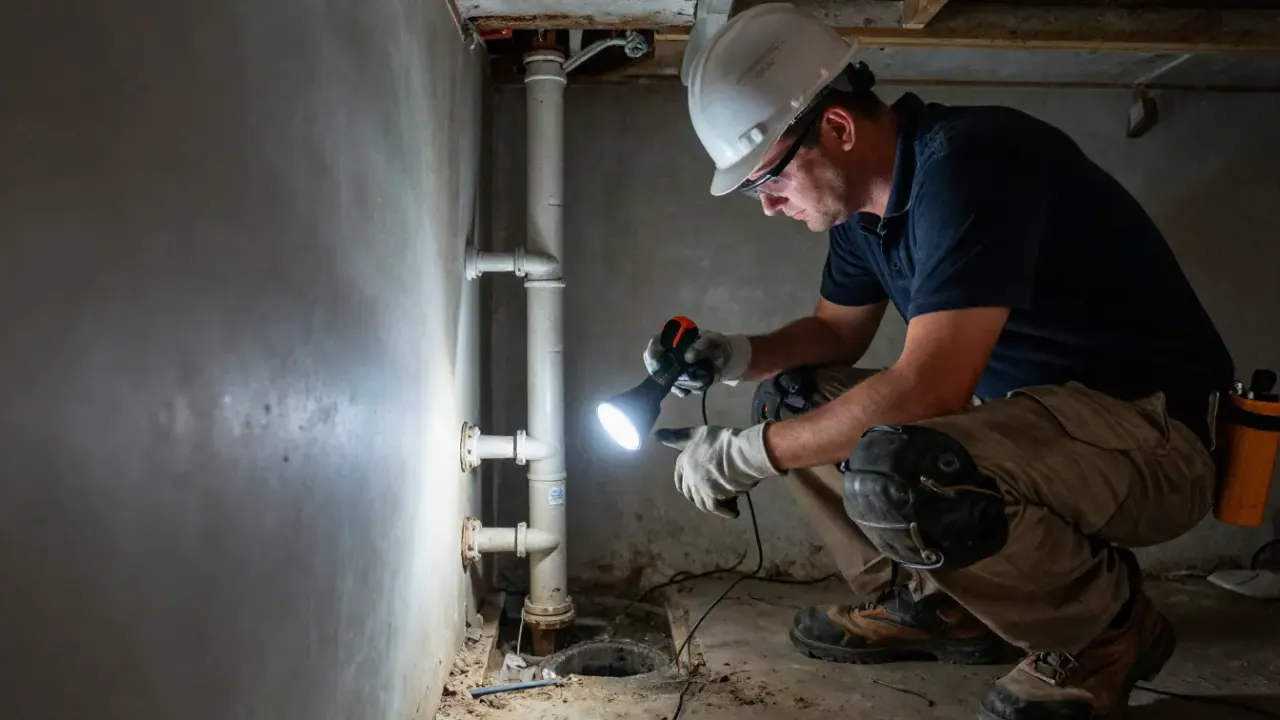
We ask what you noticed first: a hiss, ice on the coil, a higher bill, or water stains. That tells us whether we are chasing refrigerant or condensate. We also check the air handler, the line set, and the drain pan before we open any tools. Ten minutes, and it usually narrows the search to one side of the system.
A heated diode or infrared sensor that sniffs refrigerant at every joint, valve, and brazed connection. It is the first pass on any refrigerant circuit and it catches leaks too small to see.
Picks up the high-frequency sound of escaping gas or pressurized water. We use it to confirm electronic hits and to trace line sets buried inside walls.
Shows the temperature difference between wet and dry surfaces. It is how we trace a condensate leak behind drywall or under a slab without tearing out the whole surface.
For stubborn refrigerant leaks that hold static pressure but lose charge under load. Tracer gas plus a Sewerin detector finds what a standard sniffer misses.
RIDGID and Milwaukee gauge sets that compare static and running pressures to the manufacturer's spec. This is the first hard data point on every call.
Confirms how far water has spread behind a wall, under a floor, or across a ceiling. We use them to map the wet footprint before any repair starts.
A two-story Otay Ranch home had an upstairs coil that froze solid every three days. The previous company recharged the system twice in one summer and never tested for a leak. The homeowner was running the fan continuously just to keep the house cool.
After: We pressure-tested the circuit, found a pinhole in the copper line set behind the air handler, and repaired it with silfos. After evacuation and recharge to spec, the coil stopped freezing and the house cooled to 74 degrees in under 20 minutes.
Book this service →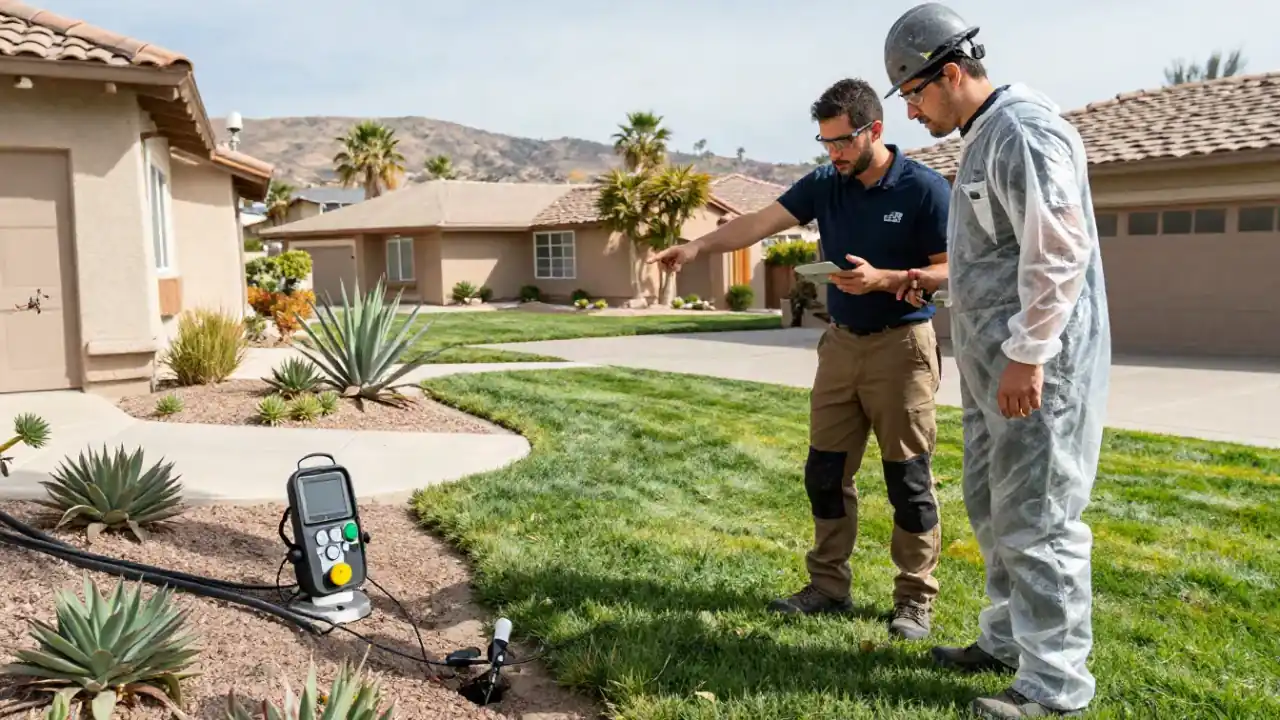
A ceiling stain spread across two square feet in an Eastlake home after a humid week. The homeowner assumed it was the roof and had a roofer out twice with no fix. The attic air handler was dripping into the pan, which had overflowed for weeks.
After: We cleared the clogged condensate drain, replaced a cracked pan, and mapped the moisture with a FLIR camera and moisture meters. The stain stopped spreading within a day, and the drywall dried without mold.
Book this service →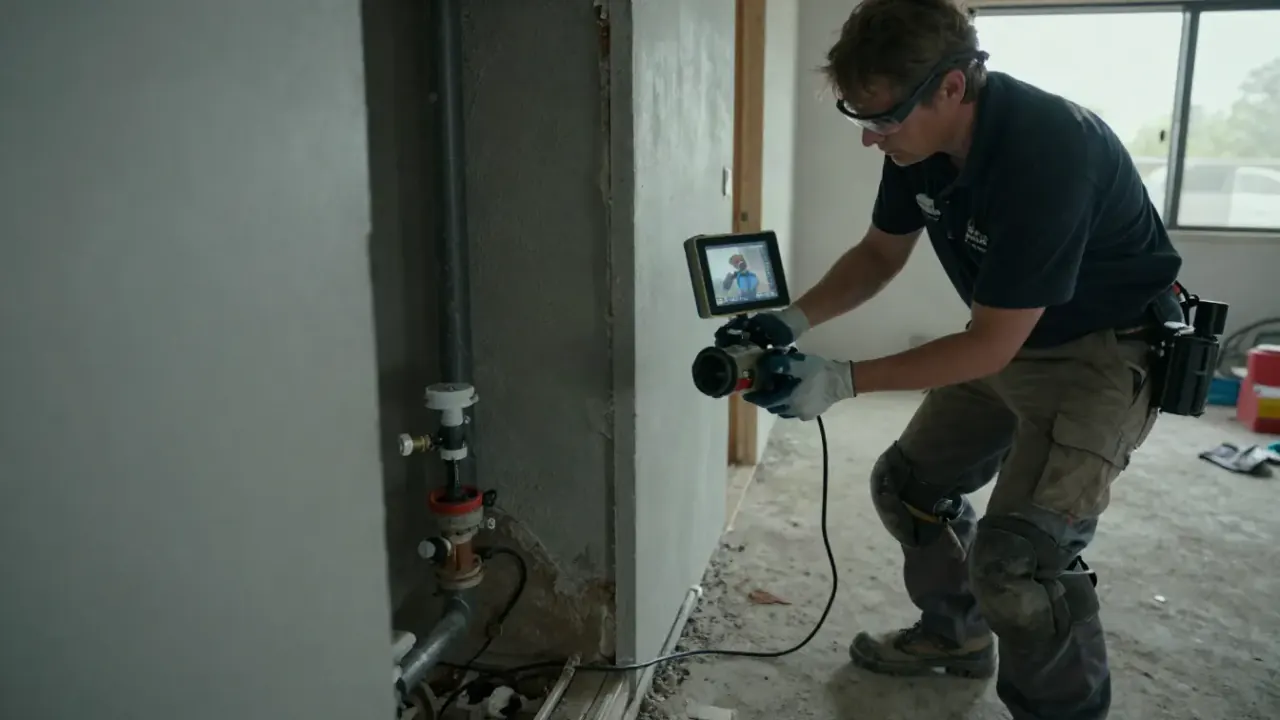
A Rolling Hills Ranch homeowner saw a 28 percent jump in the summer power bill and the compressor was short-cycling every few minutes. Two companies quoted a full system replacement at over $7,000 without testing the refrigerant circuit.
After: We found a refrigerant leak at a Schrader valve with an electronic detector, confirmed it with tracer gas, and replaced the valve and O-rings. After recharge to spec, the compressor cycled normally and the next bill dropped back to the prior summer's range.
Book this service →Most calls come down to one of these five failures. Each one gets worse with time, and each one has a specific fix we run the same visit whenever parts allow.
Ask a pro →We pressure-test the circuit, sweep every joint with an electronic detector, and confirm the leak point with tracer gas. Once we seal it and recharge to spec, the system cycles normally again and the compressor stops overheating.
We clear the drain line, test the pan and float switch, and use a FLIR thermal camera and moisture meters to map how far the water traveled. You get a written assessment for insurance if the damage is already done.
We check airflow first, then pressure-test the refrigerant circuit. If there is a leak, we find it with electronic and ultrasonic detectors, repair it, and recharge to the manufacturer's spec so the coil stops freezing.
We run a pressure test under load and sweep the line set with a Sewerin tracer gas detector. That combination catches the small leaks that a basic electronic sniffer alone will not confirm.
Most residential HVAC leak detection calls in Chula Vista run $180 to $450 in 2026, and the diagnosis takes two to four hours. Refrigerant circuit testing sits at the lower end; condensate leaks behind drywall or under a slab cost more because of the thermal imaging and moisture mapping involved. If we find the leak and you approve the repair, we credit the diagnostic fee toward the fix.
The best service is the one that confirms the leak with two independent methods before quoting a repair. We pair electronic leak detection equipment with ultrasonic leak detectors on refrigerant circuits, and thermal imaging cameras with moisture meters on condensate leaks. Ask any company what tools they bring and whether the diagnostic fee is credited toward the repair. Those two answers separate a real leak detection service Chula Vista call from a recharge-and-hope visit.
Nine times out of ten it is a clogged condensate drain line or a cracked drain pan, not a refrigerant problem. Chula Vista humidity and dust feed algae growth inside the trap, and the pan overflows into the attic or ceiling. We clear the line, test the pan, and check the float switch. If the leak is under the slab, we switch to thermal imaging and acoustic listening to trace it without breaking concrete.
Yes. We pressure-test the circuit, then sweep every joint, valve, and coil with an electronic detector and confirm with an ultrasonic leak detector. Small leaks that hold static pressure but lose charge under load are the ones most companies miss, and they are exactly what tracer gas detectors catch. Once we mark the leak point, we quote the repair and recharge to the manufacturer's spec.
If your AC is losing charge, dripping into the ceiling, or running nonstop, the leak is not going to seal itself. Call (619) 943-1896 and we will pressure-test the system, show you the leak point, and quote a flat repair price before we start.
Book a Leak Check (619) 943-1896 →Reach us at (619) 943-1896 any time, day or night. Our emergency line is staffed 24/7, and regular appointments run Monday through Friday from 8 a.m. to 6 p.m. If you leave a message after hours, we call back within 15 minutes. We serve all of Chula Vista and the surrounding San Diego County area.