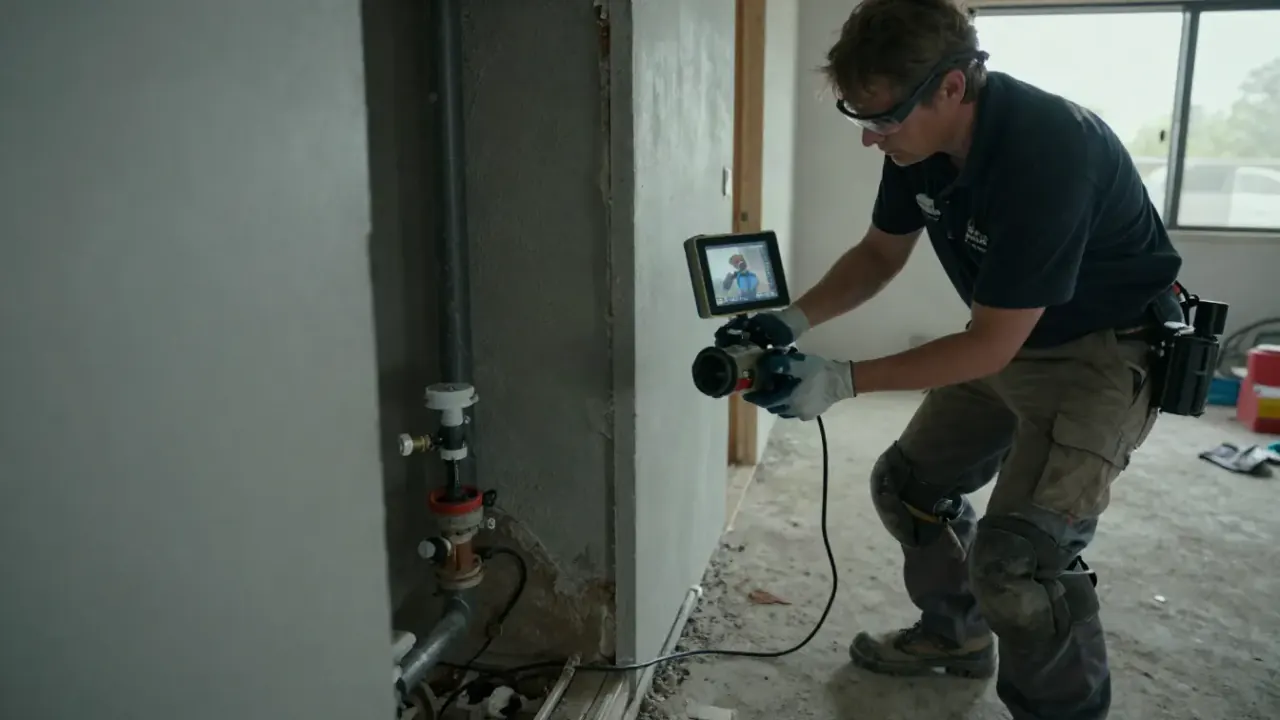
Licensed leak detection specialists serving San Diego County homes and businesses
Faucet Leak Detection in Chula Vista That Stops Hidden Drips Fast
Faucet Leak Detection in Chula Vista is the fastest way to stop a drip you cannot see from turning into a water bill you cannot explain. Our technicians use acoustic listening devices and thermal imaging cameras to pinpoint leaks behind walls, under cabinets, and inside slabs. We serve homeowners, property managers, and business owners across San Diego County. Same-day appointments are available, and we answer calls 24/7.
What Faucet Leak Detection in Chula Vista Actually Involves
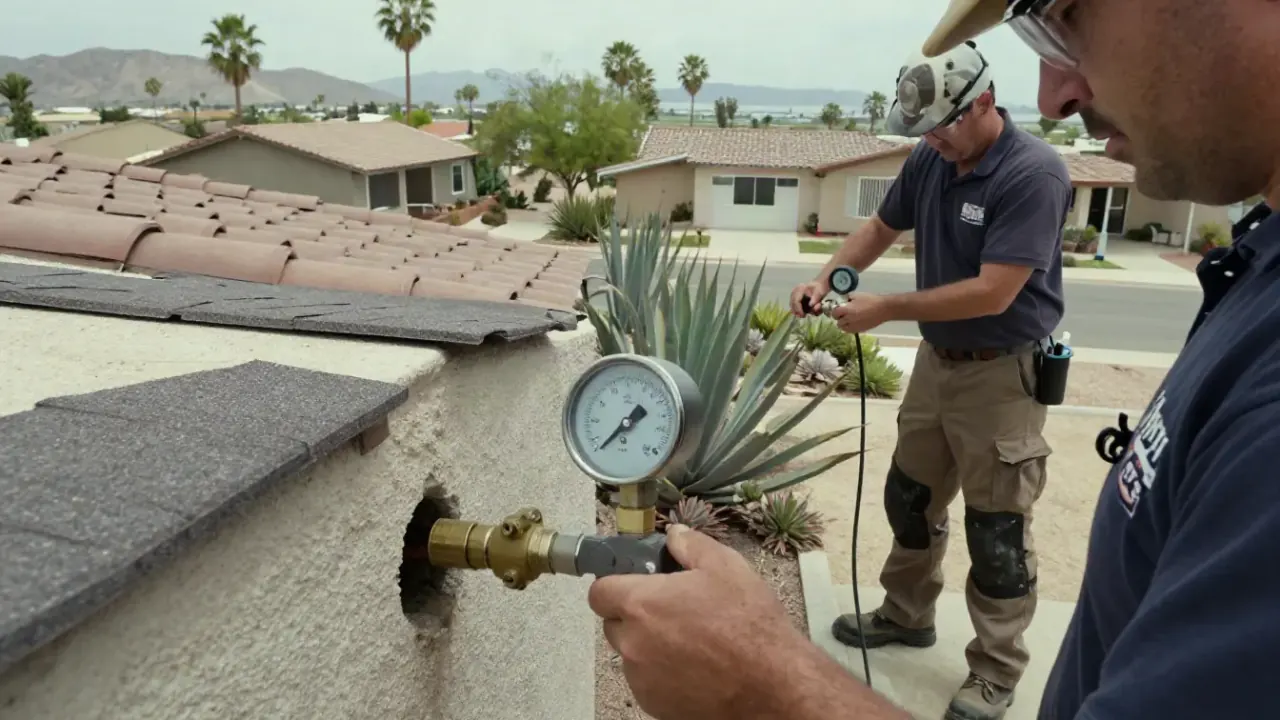
Faucet Leak Detection in Chula Vista is a diagnostic service that locates water escaping from faucet supply lines, valve seats, cartridges, and the concealed pipe runs behind your cabinets and walls. We start with pressure testing gauges on the main line, then use acoustic listening devices and moisture meters to isolate the exact failure point. A pinhole leak in copper pipe can lose 10 to 30 gallons a day before you ever see a stain. We find it, mark it, and give you a written scope before any repair begins.
Chula Vista homes built in the 1970s and 1980s often still have original copper pipe and brass faucet bodies that corrode from the inside out. Hard water in the 91911 and 91910 ZIP codes accelerates that corrosion, and a dripping kitchen faucet can add $40 to $80 a month to your bill. If you have been searching for faucet leak detection near me and getting generic advice, our team walks your property, tests every fixture, and tells you exactly which line is failing and why.
Every detection visit covers the full fixture set in your home or unit: kitchen, bathrooms, laundry, and any exterior hose bibs. We test supply lines, valve bodies, cartridges, and drain connections. The written report and the meter comparison are included. Repairs are quoted separately, and you approve the scope before we open anything.
01
✓
Full Fixture Inspection
We test every faucet in the home, not just the one you called about. A failed cartridge in the guest bath can waste as much water as the kitchen faucet you noticed. Testing all of them takes an extra 15 minutes and catches problems early.
02
✓
Pressure Testing
We isolate the suspect line, pressurize it with a gauge, and watch for a drop. This confirms whether the leak is on the supply side or the drain side. It is the fastest way to rule a line in or out before we open a wall.
03
✓
Thermal and Acoustic Scan
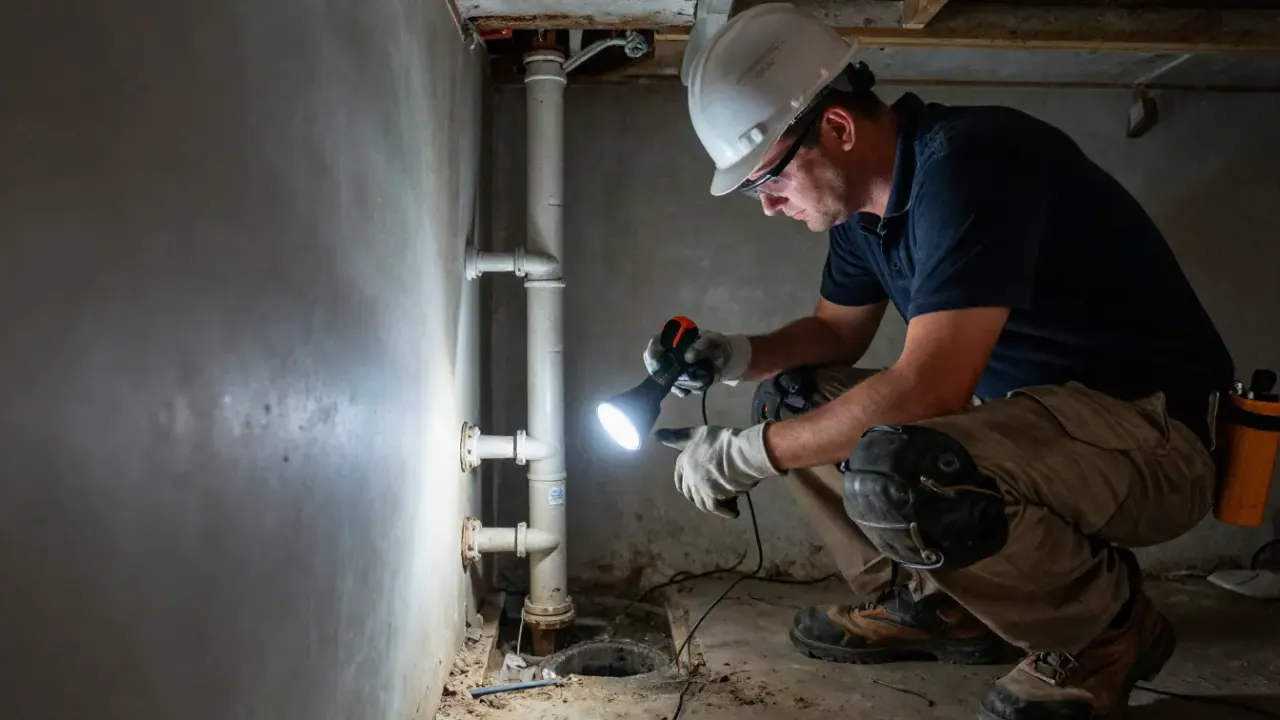
A FLIR infrared camera and acoustic listening devices scan the walls and cabinet interiors for temperature and sound signatures of escaping water. We mark the spot on the drywall with tape so you can see exactly where the failure is.
04
✓
Moisture Mapping
We record moisture readings across the affected cabinet, floor, and adjacent wall. That map tells you how far the water traveled and whether the material needs drying or replacement. It also documents the damage if you file an insurance claim.
05
✓
Written Findings and Quote
You get a one-page report listing each fixture, its condition, and the recommended action. Repair options come with prices. Nothing gets opened up until you approve the scope, and the detection fee is credited if you book the repair with us.
06
✓
Post-Repair Retest
After any repair, we pressurize the line again and recheck the meter. You see the reading stop moving. That retest is what separates a real fix from a guess, and it is included in every repair we do.
How it works
How Our Faucet Leak Detection Process Works
You call (619) 943-1896 and describe what you are seeing: a drip under the sink, a warm spot on the floor, a spike on the water bill. We ask three or four questions, give you a price range, and book a window. Most calls are answered by a technician, not a call center.
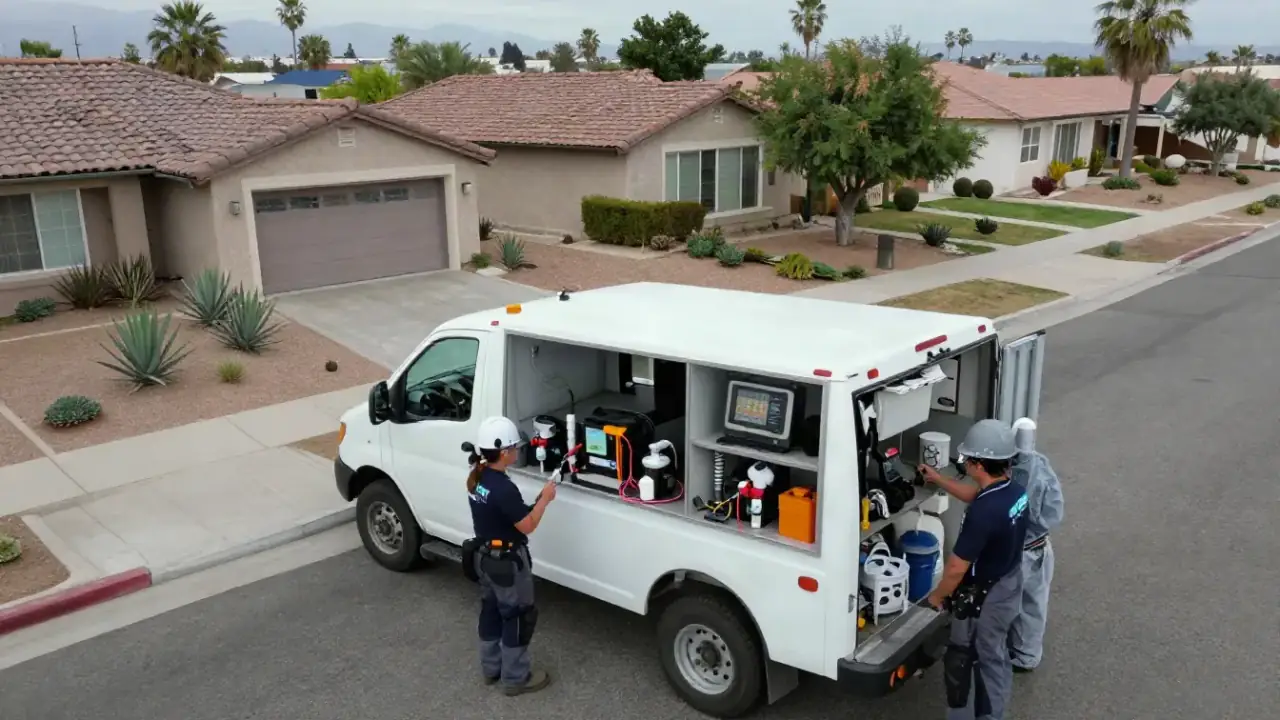
A licensed technician arrives with pressure testing gauges, moisture meters, and a FLIR infrared camera. We test the main shutoff, then work fixture by fixture through the kitchen, bathrooms, and laundry. This walk-through takes 20 to 30 minutes in a typical Chula Vista home.
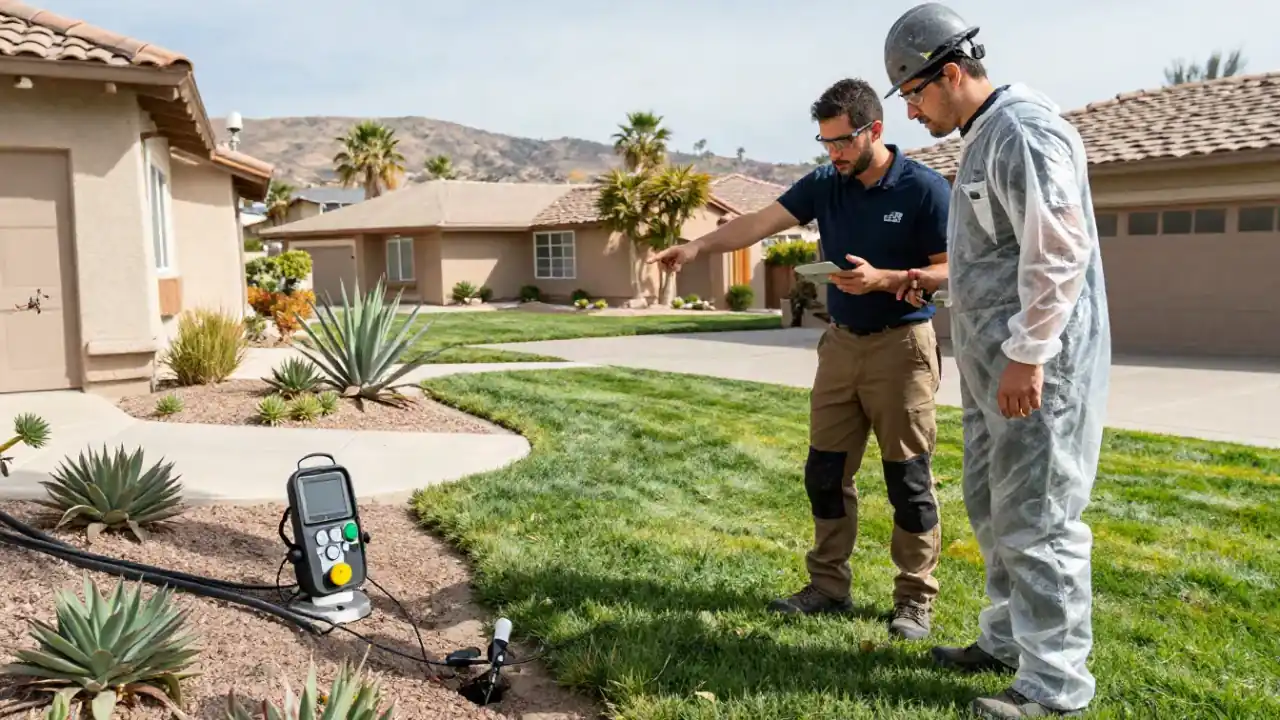
Once we narrow the zone, we use acoustic listening devices and ultrasonic leak detectors to isolate the exact point. For concealed lines, we bring in video pipe inspection cameras. You watch the screen with us. No guesswork, no exploratory demolition.
We hand you a one-page report: what failed, where it is, how much water it is losing, and what it takes to fix it. You get two or three repair options with prices. Nothing gets opened up until you approve the scope.
If you approve the repair, we complete it the same visit in most cases. New cartridge, new supply line, or a copper splice with solder and pipe repair clamps. We pressure test the line again before we pack up. You get a warranty on the work.
STEP 01Phone Intake
You call (619) 943-1896 and describe what you are seeing: a drip under the sink, a warm spot on the floor, a spike on the water bill. We ask three or four questions, give you a price range, and book a window. Most calls are answered by a technician, not a call center.
Tools & methods
Tools and Methods We Use
01
✓
Acoustic listening devices
Amplify the sound of water escaping a pressurized line. We use them on copper and PEX runs behind cabinets and inside walls. Accurate to within a few inches on most residential lines.
02
✓
FLIR thermal imaging cameras
Detect temperature differences caused by escaping water. They read through drywall, tile, and stucco, which keeps us from opening walls to look for a leak we can see on screen.
03
✓
Pressure testing gauges
Confirm whether a suspect line holds under load. We isolate the run, pressurize it, and watch the gauge. A drop confirms the leak; a steady reading sends us to the next zone.
04
✓
Moisture meters
Measure water content in drywall, wood, and cabinet material. We use them to map how far water traveled and to confirm after a repair that the area is drying out.
05
✓
Video pipe inspection cameras
Send a lighted camera through drains and supply lines to see corrosion, root intrusion, and joint failures directly. You watch the screen with us, so the finding is not a black box.
06
✓
Sewerin and Gutermann detectors
Professional-grade leak detection platforms for tracer gas and acoustic work. We use them on lines where standard acoustic and thermal methods give inconclusive readings.
Real results
Before and after.
Faucet Leak Detection
Kitchen Faucet Cartridge Failure
A homeowner in the 91913 ZIP code heard a drip inside the cabinet at night and found the cabinet base damp. The water bill had climbed $60 over two months. The faucet was 12 years old with the original cartridge.
After: We isolated the leak to a failed cartridge and worn O-rings, replaced both with matching parts, and pressure tested the line. The meter stopped moving. Total job time was 55 minutes, and the repair cost $185 including parts.
A family in Bonita Vista noticed a warm spot on the bathroom floor and a faint water sound at night. The faucet tested clean. The meter still spun with every fixture off, which pointed to a concealed leak.
After: Acoustic listening and thermal imaging narrowed the leak to a pinhole in a copper supply line 14 inches behind the drywall. We cut a 12-inch access hole, soldered a new section, and retested. The meter stopped. Repair and patch ran $640.
A tenant in Third Avenue Village called at 10 p.m. with water pooling under the kitchen sink and spreading toward the hallway. The supply line had cracked at the compression nut and was spraying under pressure.
After: We shut the angle stop, replaced the supply line with a braided stainless unit, and dried the cabinet with a moisture meter check. The floor stayed dry overnight. Emergency call and repair came to $310.
Most faucet leaks fall into a handful of categories. Knowing which one you have tells you whether the fix is a $15 part or a repipe. Here are the problems we run into most often in Chula Vista homes.
We pull the cartridge, inspect the seat and O-rings, and replace the failed part with a matching RectorSeal or OEM component. If the faucet body is corroded beyond saving, we tell you and quote a replacement. Most cartridge repairs take under an hour.
↗02
Water pooling inside the sink cabinet
We trace the source with moisture meters and thermal imaging. It is usually a cracked supply line, a loose compression fitting, or a failed valve body. We repair the connection, dry the cabinet, and confirm with a retest that the area stays dry.
↗03
Water bill spiked with no visible leak
We shut off every fixture, watch the meter, and use acoustic listening devices and ultrasonic leak detectors to isolate the hidden loss. Once we mark the spot, we quote the repair and open only what needs opening.
↗04
Faucet leak after a repipe or remodel
We pressure test every new connection and check each fitting with a moisture meter. If a joint is weeping, we reseat or resolder it. We also verify the faucet cartridge was seated correctly, which is a common miss after a DIY install.
↗
Proof you can check
Licensed, Certified, and Reviewed
California Contractor License (C-36 Plumbing) · California Contractors State License Board
IAPMO certification · International Association of Plumbing and Mechanical Officials
Backflow Prevention Certification · San Diego County health authority
OSHA safety compliance · Occupational Safety and Health Administration
EPA WaterSense partner practices · U.S. Environmental Protection Agency
Most residential detections run $180 to $450 in 2026, depending on how many fixtures and lines we test. A single kitchen faucet with an accessible supply line sits at the low end. Multi-fixture searches or slab-concealed lines push toward the top. If we cannot locate the leak, you pay nothing. Repair is quoted separately before we start.
The best service is the one that finds the leak without tearing your house apart. Look for a licensed C-36 plumbing contractor using acoustic listening devices, thermal imaging cameras, and pressure testing gauges. Ask whether they warranty the repair. We do all of that, and we show you the meter reading before and after so you can verify the fix.
Hard water in Chula Vista wears out faucet cartridges, O-rings, and valve seats faster than in softer-water cities. Most leaks we find come from a failed cartridge, a cracked supply line, or a corroded copper stub-out behind the cabinet. A 20-year-old faucet in the 91910 ZIP code is usually on its second or third cartridge by now.
Yes. A faucet dripping once per second wastes about 3,000 gallons a year, which adds roughly $40 to $80 a month to a typical Chula Vista water bill. A steady stream the width of a pencil tip can triple that. We compare your meter reading before and after repair so you can see the loss stop in real time.
A drip you can hear is a leak you can stop. Call (619) 943-1896 and we will schedule a licensed technician, usually the same day. We are bonded, insured, and we warranty our repair work for 12 months. If we cannot find the leak, you do not pay for the detection.
Reach us at (619) 943-1896 any time, day or night. Our emergency line is staffed 24/7, and regular appointments run Monday through Friday from 8 a.m. to 6 p.m. If you leave a message after hours, we call back within 15 minutes. We serve all of Chula Vista and the surrounding San Diego County area.