Full Appliance Inspection
We check the supply lines, drain hoses, door gaskets, inlet valves, and drain pumps on the leaking appliance. That covers the five most common failure points on washers, refrigerators, and dishwashers in Chula Vista homes.
Appliance Leak Detection in Chula Vista is the fastest way to stop a slow drip from turning into a $3,000 floor repair. We use thermal imaging cameras and moisture meters to trace water back to your washer, refrigerator, or dishwasher, then fix the line and test it before we leave. If you have soggy flooring, a musty cabinet, or a water bill that jumped, call us at (619) 943-1896. We cover every ZIP in Chula Vista, CA, from 91910 to 91915.
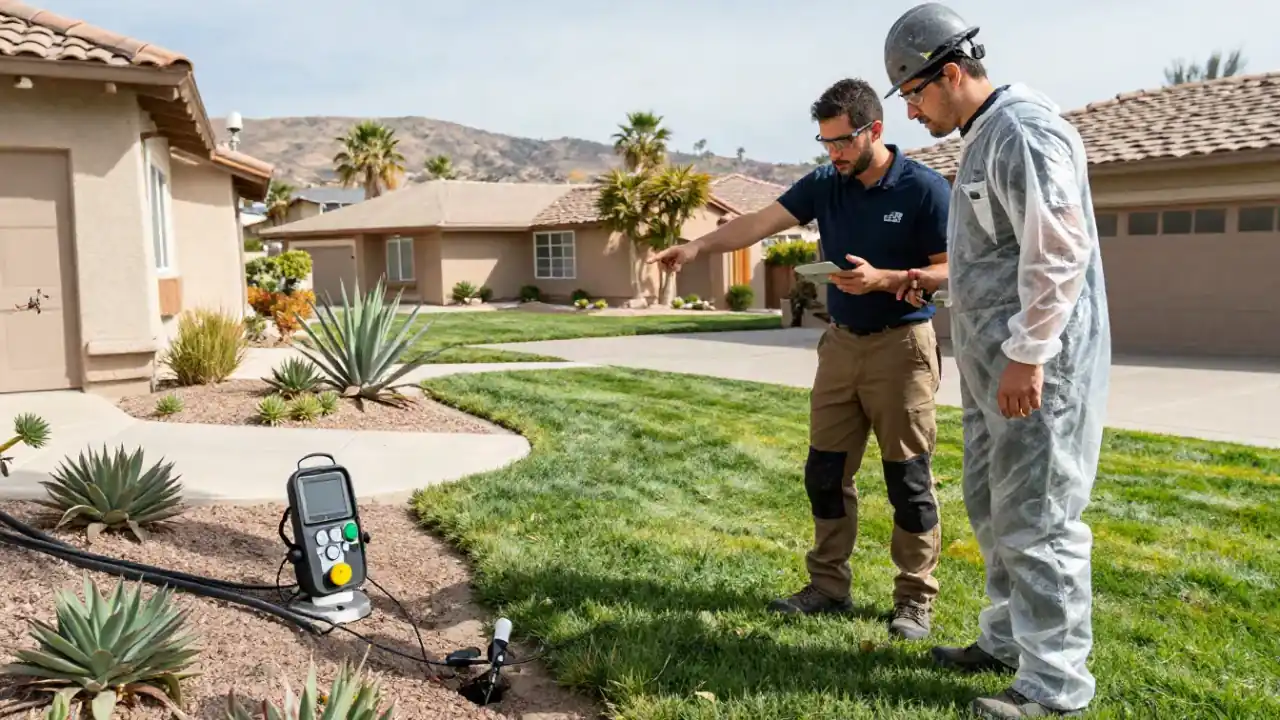
Appliance Leak Detection in Chula Vista is the process of tracing hidden water loss from refrigerators, washing machines, dishwashers, and ice makers using non-invasive tools. We start with a visual check of the supply lines, drain hoses, and door gaskets, then confirm the source with a FLIR infrared camera and a pin-type moisture meter. If the leak is behind a wall or under a slab, we bring in acoustic listening devices and a video pipe inspection camera. Most single-appliance calls take 45 to 90 minutes from arrival to written findings.
Chula Vista homes built between the 1970s and early 2000s often still run the original copper pipe and rubber supply lines behind the washer box. Those lines fail quietly. Add our hard water, which runs high in dissolved minerals across San Diego County, and you get pinhole leaks and cracked inlet hoses that drip only when the appliance is running. That is why a Chula Vista appliance leak detection visit usually starts with a load test: we run the machine through a full cycle while watching the meter.
Every call includes a full diagnostic, instrument confirmation, and a same-day repair quote. We do not charge extra to bring the thermal camera or the moisture meter. Here is what is covered.
We check the supply lines, drain hoses, door gaskets, inlet valves, and drain pumps on the leaking appliance. That covers the five most common failure points on washers, refrigerators, and dishwashers in Chula Vista homes.
We scan the floor and surrounding walls with a FLIR thermal imaging camera and take moisture meter readings. This tells us how far the water traveled and whether the subfloor or cabinet base is affected.
After the repair, we pressure-test the supply line at 60 psi and run the appliance through a full cycle. If the gauge holds and the floor stays dry, the leak is fixed. We do not leave until both tests pass.
You get a written price for any repair before we start. Most line and gasket replacements are done on the spot with parts we carry on the truck. No second visit, no waiting for a quote.
We leave a one-page summary with the leak source, before-and-after moisture readings, and the parts we replaced. It is the document you need for a warranty claim or an insurance file.
We flag the other appliances in your home that use the same style of supply line. If your washer hose is cracked, your fridge line is probably close behind. You get a replacement priority list before you have a second leak.
You describe what you are seeing: water under the fridge, a puddle behind the washer, a dishwasher that leaves a ring on the floor. We ask three questions about the appliance age, the water source, and whether the leak happens only during a cycle. That tells us which tools to load and whether you need an emergency slot.
We arrive in a marked truck and start with a visual inspection of the supply lines, drain hoses, and connections. We check the washer box, the refrigerator water line, and the dishwasher supply under the sink. This takes 10 to 15 minutes and often finds the obvious culprit: a cracked rubber hose or a loose compression fitting.
If the source is not visible, we confirm with a FLIR thermal imaging camera and a moisture meter. For leaks behind a wall or under the slab, we use acoustic listening devices and a video pipe inspection camera. We run the appliance through a full cycle and watch the water meter to prove the leak is active.
Once we know the source, we quote the repair. Most appliance line leaks are fixed the same visit with new braided stainless supply lines, a fresh gasket, or a pipe repair clamp. After the fix, we pressure-test the line at 60 psi and run the appliance again to confirm it is dry.
We leave you with a written summary: what leaked, what we replaced, and the moisture readings before and after. We also flag the other appliances in the house that use the same style of line, so you can replace them on your schedule instead of waiting for the next failure.
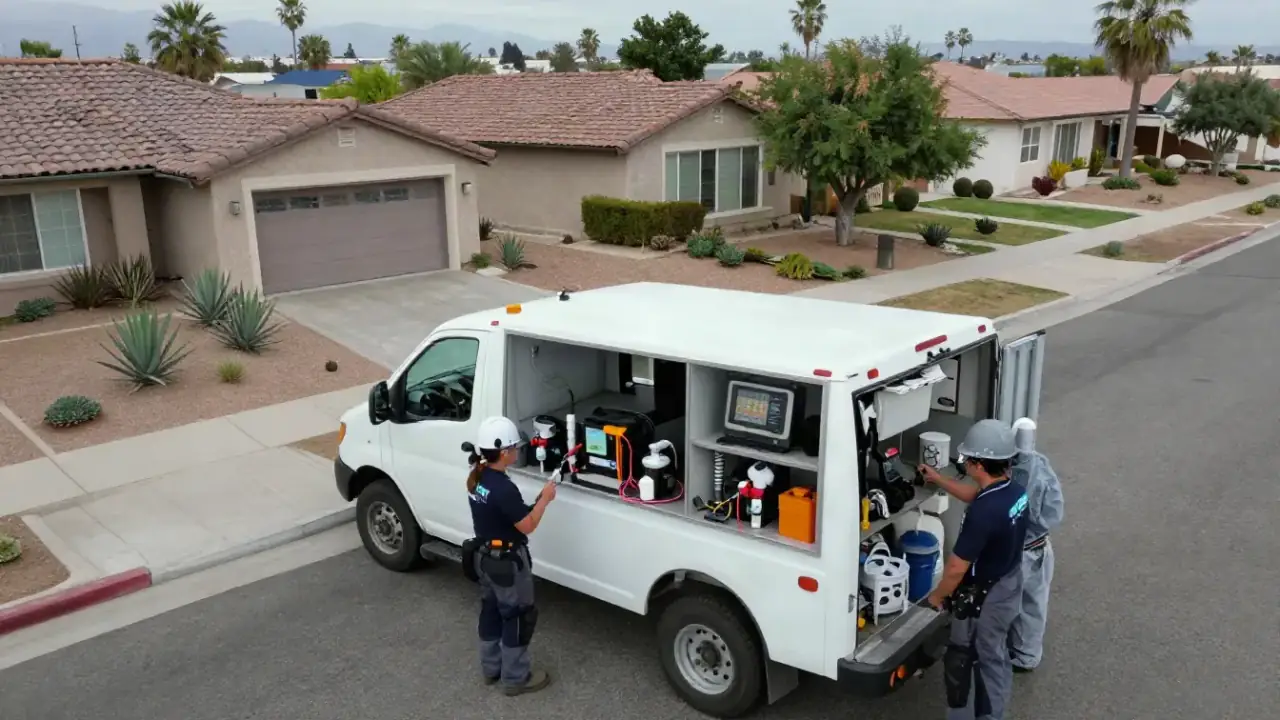
You describe what you are seeing: water under the fridge, a puddle behind the washer, a dishwasher that leaves a ring on the floor. We ask three questions about the appliance age, the water source, and whether the leak happens only during a cycle. That tells us which tools to load and whether you need an emergency slot.
Shows temperature differences caused by evaporating water. We use it to map the wet zone behind appliances and under cabinets without cutting into anything.
Reads the exact water content in drywall, wood, and cabinet bases. We take readings before and after the repair to prove the area is drying.
Picks up the sound of water escaping a pressurized line. This is how we find pinhole leaks in copper pipe behind the washer box.
Isolates the appliance supply line and pressurizes it to 60 psi. If the gauge drops, the line is leaking. We use it to confirm the repair is complete.
Lets us see inside drain lines and supply pipes without cutting them open. We use it on slow drains and suspected root intrusion.
Finds very slow leaks that moisture meters miss. We introduce a safe tracer gas into the line and track where it escapes.
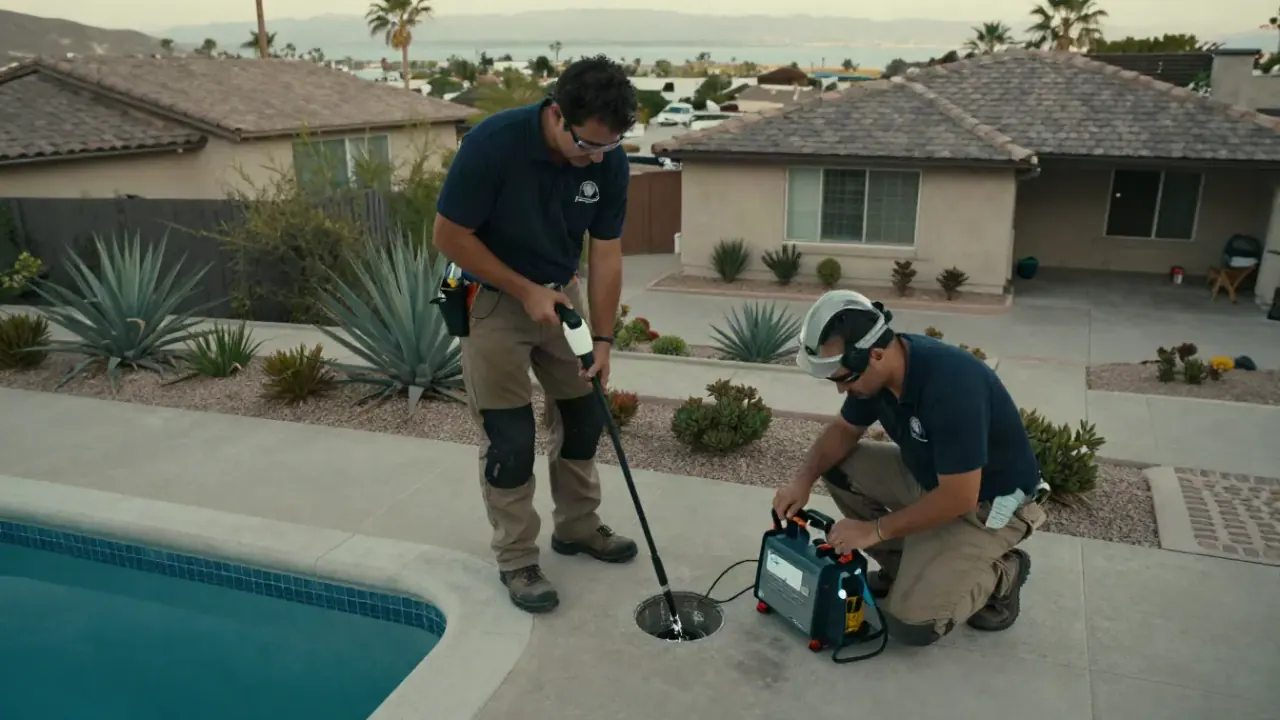
A 1980s Castle Park home had a rubber washer inlet hose that dripped during every fill cycle. The washer box was rusted and the drywall behind it was soft to the touch. The homeowner noticed a musty smell but no standing water.
After: We replaced both inlet hoses with braided stainless steel lines, repaired the rusted washer box, and pressure-tested at 60 psi. The moisture meter read 12% before and 4% after drying. The next five loads ran dry.
Book this service →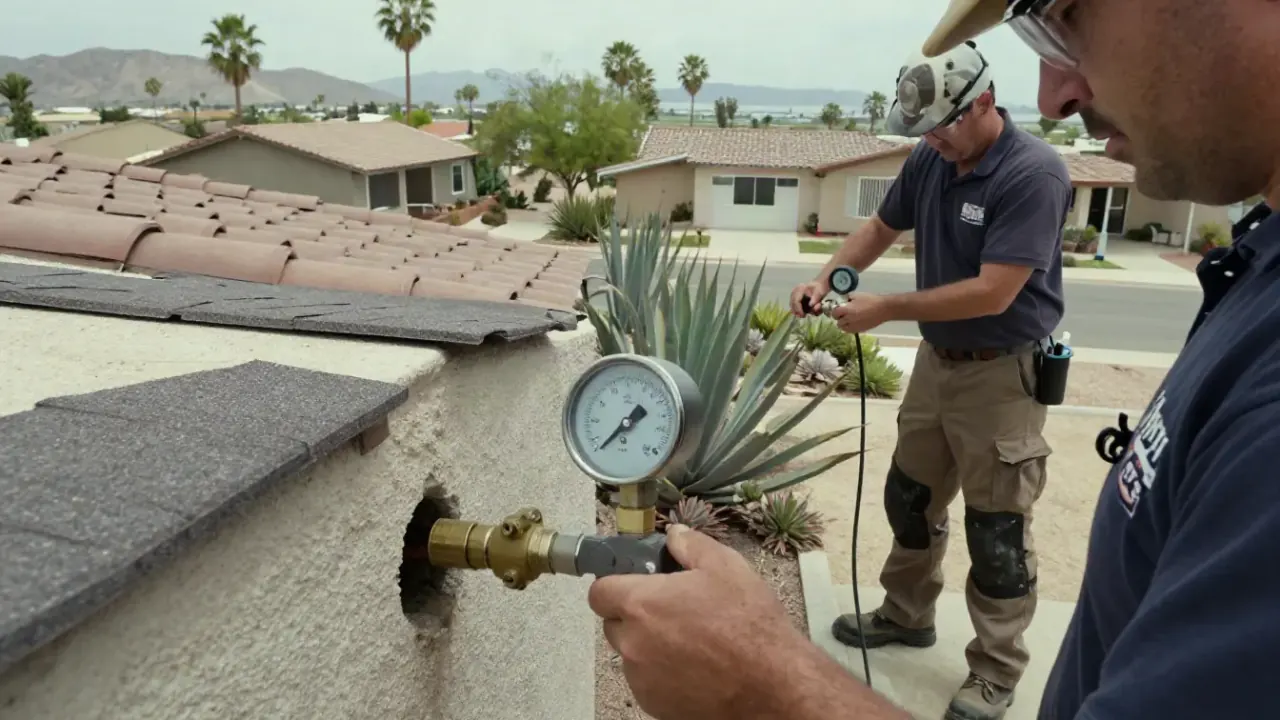
A refrigerator water line behind the cabinet in an Otay Ranch home had been leaking for weeks. The cabinet base was swollen and the floor under the fridge was wet. The homeowner thought the fridge was just old and was about to replace it.
After: We traced the leak to a failed saddle valve with a moisture meter and thermal camera. We replaced the valve and the line, dried the cabinet base, and saved the refrigerator. The repair cost $280 instead of a $1,800 fridge replacement.
Book this service →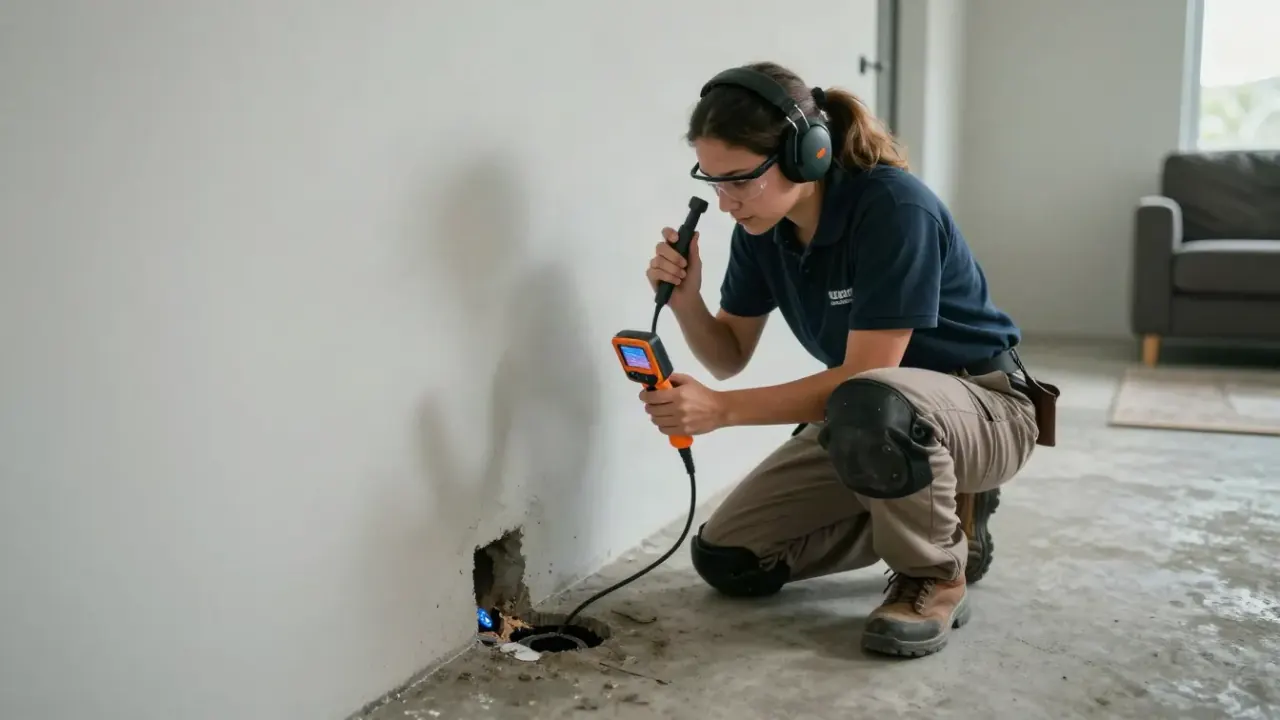
A dishwasher in an Eastlake condo leaked at the bottom corner of the door during every wash. The cabinet floor was delaminating and the unit smelled musty. The homeowner was ready to buy a new dishwasher.
After: We replaced the door gasket and the pump seal, then ran a full wash cycle with the unit pulled forward. The floor stayed dry. The moisture meter read 8% after drying, down from 22%. Total repair was $210.
Book this service →Most appliance leaks start small and stay hidden until the damage is expensive. These are the calls we run every week across San Diego County.
Ask a pro →We replace the rubber hose with a braided stainless steel line, pressure-test it at 60 psi, and run a full cycle to confirm. Most jobs are done in under an hour with parts from the truck.
We pull the fridge, trace the line with a moisture meter, and replace the saddle valve or the line itself. We dry the cabinet base and check the surrounding flooring before we push the fridge back.
We replace the door gasket and check the pump seal and supply line while the unit is out. We run a full wash cycle with the unit pulled forward so you can see it stay dry.
We isolate each appliance with pressure testing gauges and watch the water meter. Acoustic listening devices and thermal imaging cameras find the leak even when the floor feels dry to the touch.
Most appliance leak detection calls in Chula Vista run $180 to $450 in 2026, including the diagnostic and the repair if it is a simple line or gasket. Hidden leaks behind a wall or under a slab cost more because they need acoustic listening devices or a video pipe inspection camera. We quote the full price before we start.
The best service is the one that proves the leak source with instruments instead of guessing. Ask whether they use thermal imaging cameras, moisture meters, and pressure testing gauges on every call. We do. We also carry the common replacement parts on the truck, so most jobs are fixed the same visit.
In Chula Vista, the most common cause is a cracked rubber inlet hose behind the washer box. Hard water breaks down the rubber from the inside, and the leak only shows during a fill cycle. Other culprits are a loose drain hose, a worn door gasket on a front-loader, or a failed water inlet valve. We test all four in one visit.
Pull the dishwasher out and look at the supply line and drain hose under the sink. If you see water only during the wash cycle, the leak is usually at the pump seal or the door gasket. If water shows up when the machine is off, it is the inlet valve. We trace it with a moisture meter and fix it the same day.
A wet floor under the washer or fridge will not dry out on its own. We find the leak, fix it, and test the line before we leave. Same-day appointments, upfront pricing, and a written report. Call (619) 943-1896 now.
Call Now (619) 943-1896 →Reach us at (619) 943-1896 any time, day or night. Our emergency line is staffed 24/7, and regular appointments run Monday through Friday from 8 a.m. to 6 p.m. If you leave a message after hours, we call back within 15 minutes. We serve all of Chula Vista and the surrounding San Diego County area.